
Celestium Pro
For going further.
The same calm working environment, with further techniques for deeper study, analysis, research and professional use.
For the advanced and professional astrologer
When do you need Pro?
Celestium Pro is meant for astrologers who want to use further techniques for deeper analysis, research or professional work.
If you work with horary astrology, classical or Hellenistic techniques, primary directions, harmonics or astrocartography, for example, Pro gives you further tools for them within the same familiar working environment.
Four directions
More room for deeper study and research.
Celestium Pro extends the existing working environment in several directions, from working with time and place to traditional techniques and closer research into the patterns in a chart.
Time
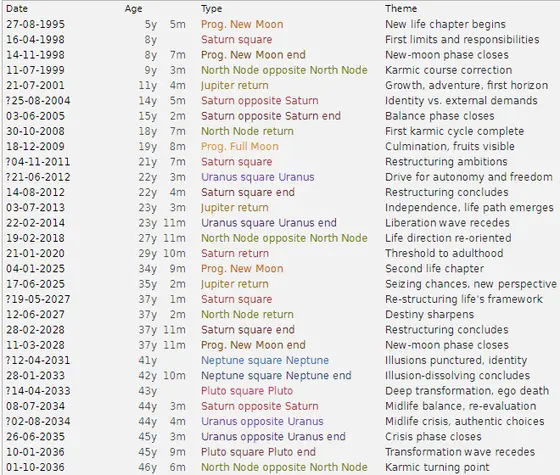
Follow time through a chart.
Primary and tertiary directions, current progressions and other techniques show how a chart develops over time.
Place
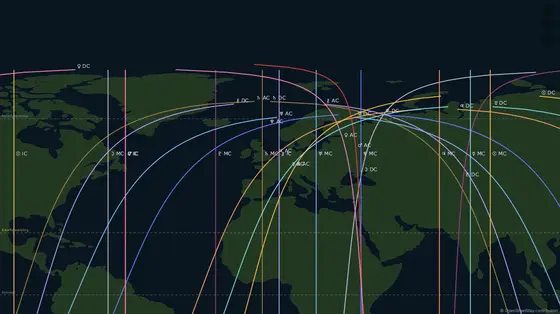
Explore the relationship between chart and place.
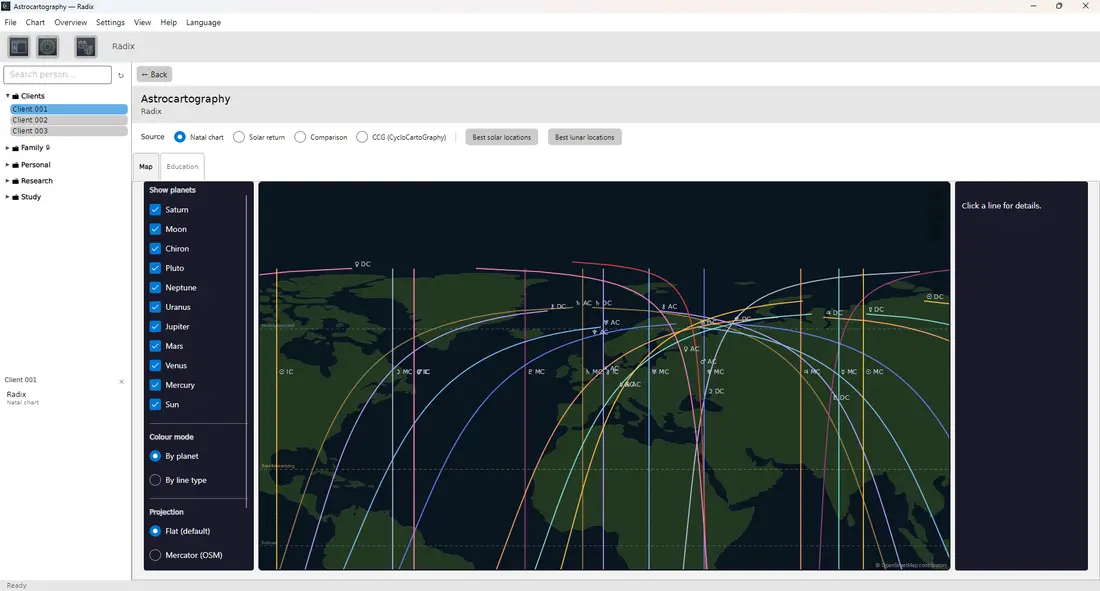
With astrocartography, Local Space and the wind rose you explore how astrological factors relate to different places and directions.
Tradition
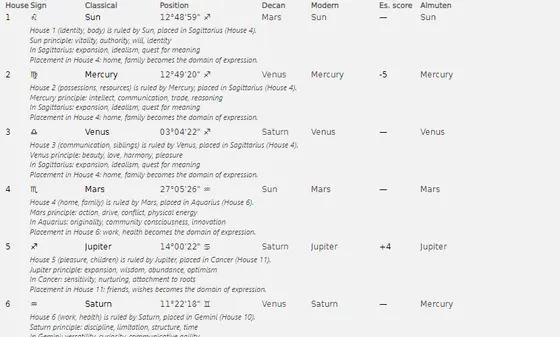
Work with more astrological systems.
Work with dignities and almutens, rulership and receptions, and the Hellenistic time lords, among others. Where relevant, you can tune the settings to the astrological tradition you work in.
Research
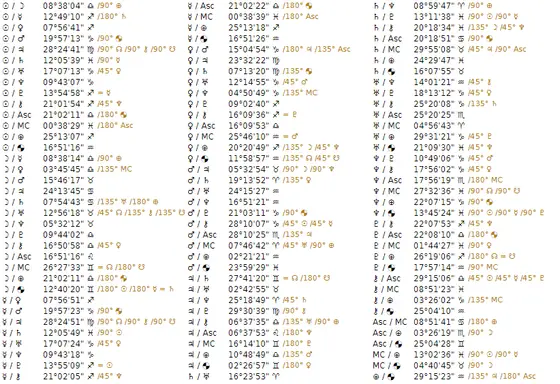
See a chart from more angles.
Midpoints, harmonics, fixed stars and minor aspects offer further ways to examine patterns and connections in a chart.


How Pro differs
What Pro adds.
Everything in Celestium is also part of Celestium Pro. Pro builds on it with further techniques and tools for deeper study, research and professional use.
What Pro adds to the dignities
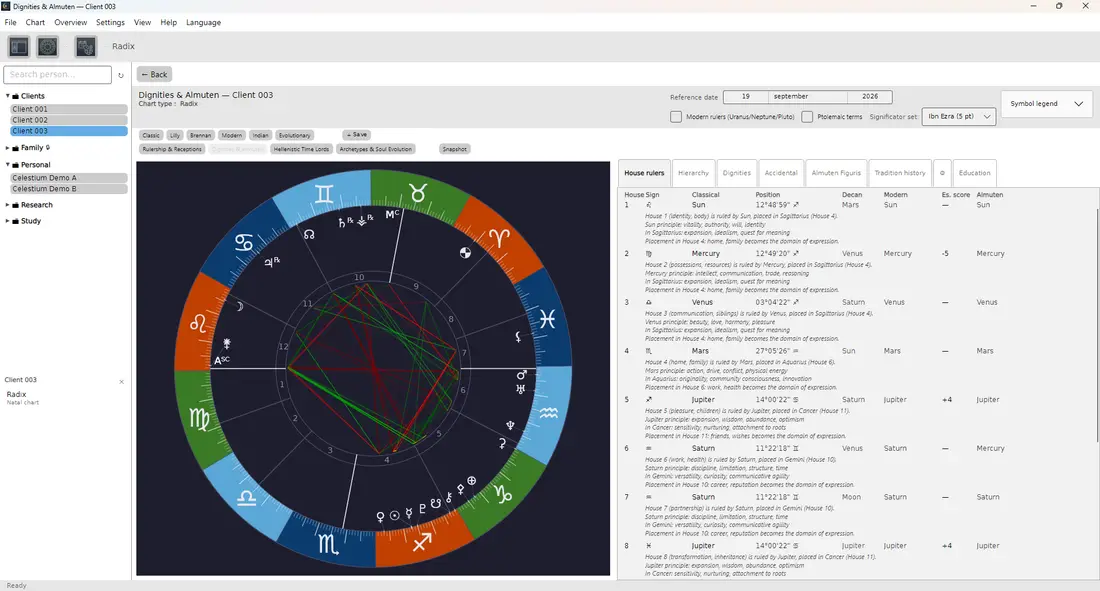
Celestium shows the essential dignities of the planets. Celestium Pro extends this with further classical and Hellenistic techniques, including almutens, rulership and receptions. That gives you more tools to take your own analysis further within these traditions.
File
- Company details
- Manage master password
- Lock session
Create new chart
- Ingress
- Harmonic chart
- Horary chart
- Primary directions
- Tertiary directions
- Minus-one-system directions
- Prenatal chart (syzygy, lunation, eclipse)
Combining and comparing charts
- Combine / Davison
- Analyse composite / combine
- Analyse horary chart
Output and notes
- Export as extended PDF
- Create and manage notes
Analysis
- Chart interpretation
- Dispositions
- Rulers
- Rulership & Receptions
- Dignities & Almuten
- Hellenistic Time Lords
- Archetypes & Soul Evolution
- Midpoints
- Harmonics
- Current progressions
- Life timeline
View
- Astrocartography
- Local Space
- Wind rose
- Lunar phases and eclipses
- Retrograde Periods
Settings: chart wheel
- Other
- Find best solar return location (Discepolo)
- Find best lunar return location (Discepolo)
- Evolutionary (Archetypes & Soul Evolution)
- Colors
Points and symbols
- Asteroids
- Hygiea
- Eros
- Lilith (asteroid 1181)
- Centaurs
- Pholus
- Nessus
- Lunar points & Nodes
- Priapus
- White Moon
- Fictitious & Sensitive points
- East Point
- Caduceus point
- Plutoids
- Fixed stars
Aspects
- Minor aspects
Help and reference
- Astrological concepts
Depth and research
For depth and research.
Dignities and almutens
Work with dignities, almutens, rulership and receptions within the classical and Hellenistic traditions. Where relevant, you can tune the settings to the tradition you work in.
Zodiacal Releasing
Examine periods of life with Zodiacal Releasing, with support for different settings and ways of calculating.
Which time lords, and after whom
Zodiacal Releasing with Loosing of the Bond after Valens and Brennan, firdaria after Abu Ma’shar and Bonatti, profections, decennials, circumambulation after Ptolemy, sect, bonification on the seven conditions of Antiochus, and doryphory.
Horary
Work with horary charts and the techniques that go with them for examining a specific question.
What the judgment pass weighs
radicality, translation and collection of light, prohibition and refranation, receptions and the natural significators. Not only the chart, the reasoning as well.
Midpoints and harmonics
Use midpoints and harmonics to examine further patterns and relationships within a chart.
The Ebertin dial
the Ebertin dial to compress the drawing into ninety degrees so that whatever stands in hard aspect falls together on one point.
Fixed stars
Add fixed stars to your analysis and examine their position relative to the planets and other chart factors.
Sabian symbols
Consult the Sabian symbols for the 360 degrees of the zodiac as a further symbolic layer in your interpretation.
Which language the reading is in
The reading itself is written in Dutch. In another interface language the headings and the framing sentences appear in that language while the body text stays Dutch.
Notes and extended PDF export
Record your analysis with notes and an extended PDF export, so calculations and findings stay with the chart.
What you can put on the export
wheel, aspect grid, distributions, midpoints, transits, life timeline and your own company details. The order those blocks appear in is fixed. Birthplace and exact location can be left off, so a chart can be shared without carrying them. There is also a notes panel, so your findings stay with the chart.
Place and time
Where, and when.
Examine how a chart develops over time and how astrological factors relate to different places on earth.
Retrograde periods and eclipses
View the retrograde periods of a year and see when planets change direction, alongside a year calendar of the lunar phases and eclipses.
What those two show
not only when a planet stations retrograde and stations direct but the whole zone around it. And a year calendar of the lunar phases with the eclipses in it, sorted into total, annular and partial.
Life timeline
Follow the life timeline and see at what age important astrological moments fall.
Which milestones are on it
the Saturn returns near 29 and 59, the Jupiter returns, the Uranus opposition near 42, the Chiron return near 50, and the Pluto and Neptune squares in between. The Chiron return is computed as an actual conjunction rather than from a mean period, because that one varies between 49 and 51 years. The same line carries the progressed lunar cycle, worked out exactly: every progressed New Moon with its ordinal number, the end of the New Moon phase at the 45 degree crossing, the progressed Full Moon and the quarters between them if you want them. The nodal return and the nodal opposition on the 18.6 year cycle are on it as well.
Astrocartography, Local Space and wind rose
Explore the relationship between chart and place with astrocartography, Local Space and the wind rose.
How those lines are drawn
The Local Space lines run as great circles all the way to the antipodal point, the way Astrodienst draws them. The wind rose puts the planets on their true compass bearing and altitude, above or below the horizon: the sky as it stands where you are, rather than on the ecliptic.
Best solar and lunar return location
Finding the best solar or lunar return location by Ciro Discepolo’s rules.
How those locations are scored
Celestium scores cities against his practical list and shows where a return falls most favourably, weighted if you like towards money, health or career.
Evolutionary astrology
Evolutionary astrology in its own terms.
Celestium Pro offers a separate workspace for evolutionary astrology, with techniques and settings suited to this school.
Pluto and the evolutionary nodes
Work with Pluto, Pluto’s polarity point, the lunar nodes and their rulers within the interpretive framework of evolutionary astrology.
How the techniques are calculated
The Pluto polarity wheel draws Pluto, the polarity point opposite it, the rulers and the nodal aspects. The planetary orbital nodes, which Forrest reads as carriers of older memory, are computed heliocentrically: only in that frame do the ascending and descending node sit exactly opposite each other. Geocentrically Mars comes out around 241 degrees from its own counter-node, leaving no axis to read.
The interpretation texts
Consult the interpretation texts as support when working with the evolutionary chart.
Sources behind the readings
The readings that come with them are Celestium’s own, written from Green, Pluto: The Evolutionary Journey of the Soul (1985 and 1988), Forrest, Yesterday’s Sky (2008), Rudhyar, The Lunation Cycle (1967) and Tarnas, Cosmos and Psyche (2006). They are there in all four interface languages.
School of thought
You pick the school, not only the technique.
Which terms, decans and triplicities are correct depends on the tradition you work in. Celestium Pro gathers those choices into six presets, from classical and Hellenistic to modern and evolutionary. One choice moves dozens of settings at once, and you can still adjust each of them afterwards.
Which sources, per screen
Celestium uses the Egyptian terms by default; in Pro you switch them to the Ptolemaic set from Tetrabiblos I.21. The six presets are classical, Lilly for strict horary, Brennan for Hellenistic work with Zodiacal Releasing, modern psychological, Indian with Drekkana decans, and evolutionary after Green and Forrest. The same division runs through the screens themselves: Rulership and Receptions reads the chart with Lilly, Houlding and Frawley, Dignities and Almutens with Ibn Ezra, Bonatti and Lilly, and the Time Lords with Brennan, Valens and Dorotheus. One chart, three readings, each with the almuten figuris, the lord of geniture, the dispositor chain, mutual and one-sided receptions and intercepted signs that belong to it.
Where the presets make a judgement call
The presets say where they have made a judgement call. The modern and evolutionary sets are marked experimental, and the Indian one states that it is a tropical chart with a Vedic decan rather than a full jyotish reading.
For practising astrologers
For anyone working with clients.
If you work with client data, Celestium Pro offers more scope to organise and screen off your working environment. Client folders are protected with a PIN in either edition; Pro adds the management around it: a master password that clears a forgotten PIN, Lock session to put every opened folder back behind its PIN in one step, and company details for reports.
Note that this governs access within Celestium and does not encrypt the database file. Use the disk encryption of your operating system for that.
How the master password is stored
The master password itself is not kept, only a PBKDF2-SHA256 derivation at 600,000 iterations, the figure OWASP recommends for it.
What it looks like
Screenshots from the program itself, using fictional charts.
Upgrading to Pro
Start where you are. Grow into it later.
Start with Celestium and move to Pro when you need more specialised techniques and research tools. Your charts, folders and settings stay as they are. You pay only the difference in price.
Upgrade€75incl. VAT · Introductory price up to and including 31 December 2026
Celestium Pro€150€190incl. VAT · Introductory price up to and including 31 December 2026